Pages

Monday, August 12, 2013

LAKE UZUNGÖL


We were on the road bright and early after our night of cow pasture camping, and before long the highway hit the Black Sea. We paralleled the coast for most of the day. It was a smooth and scenic drive under sunny skies, cruising on a coastal highway through tunnels and towns, sandwiched between the mountains and the sea.

A little after midday we took a turn onto a windy road up towards Lake Uzungöl. Once we left the coast and entered the highlands the temperature began to drop and a sporadic but heavy cloud cover tumbled through skies above. The road took us into a region of Turkey known for its tea, and the valley we drove through was surrounded by precipitous terrain that held a patchwork of plantations. We arrived at Uzungöl, a little village wrapped around a mountain lake. A large white mosque sat at one end, with gift shops and restaurants lining the water on both sides. There was a noticeable amount of construction going on - guesthouses and little hotels sprouting up throughout the town. It was only mid-afternoon, but unlike our cow pasture camping debacle the night before, we thought we’d get an early start on finding a place to pitch the tent. We drove around the lake and up into the mountains, and within five minutes the steep and windy road turned to dirt.


With every hairpin turn and break in the trees the view became more dramatic, and the farther up we got, the more the temperature dropped. We came to a convergence of roads and spotted a cluster of houses spilling down an opposing mountainside. Johannes was on the search for some tea. We’d passed up the chance to buy some earlier, so we thought we’d try the village. There was no store, only a few dozen homes and a mosque. After parking the car, Johannes asked a couple of men where he could find some tea. When they found out he was German, they yelled down into the village for their friend Ali. It took a couple of minutes, but soon an old man came walking up the path. Ali was Turkish, but had lived in Germany for fifteen years. He’d retired from his job as a welder and had moved back to the village where he was born. 


Johannes’ idea was to buy to some tea to take with us, but instead we were invited into Ali’s home for an afternoon snack. After removing our shoes at the door, he took us into his living room. His home was simple, but nice. The room was dim with the curtains drawn, but the Turkish rugs and wood paneled walls gave the place a cozy feel. Under one of the windows mint leaves where spread out to dry in the afternoon light. It was still Ramadan, so our host couldn’t partake, but he gave us tea and cookies, and sat down to talk with Johannes. They chatted for a while, and Derick and I sat and enjoyed the tea. Evening was approaching, and we still needed to find a place to camp, so after an hour or so, we thanked Ali and left the village.


We retraced the road back to the intersection, and then continued driving up towards the clouds. The tree line broke as we approached another village, and after a bend in the road we smacked into some stunning views. The cloud cover was heavy overhead, and the sun was dropping over the mountaintops, shooting beams of twilight across the valley. We could see Lake Uzungöl below, surrounded by the red-roofed houses of the village. The mountainside was steep, but we spotted some flat ground around the bend, a few hundred yards downhill from the road.


It was an especially choice place to put up a tent, the views were amazing. And after eating what little food we had, we crawled into our tent for the night. The ominous cloud cover was free of rain, but once night fell the chill creeped up through the cold earth and left me with a restless night of sleep. We were awake before dawn and left the tent to welcome the sunrise. The sun brought some much needed warmth, and after packing up our gear, we hit the road for Georgia...


A SHOT IN THE DARK

We left Istanbul in the morning and drove across the Bosporus from Europe into Asia. Johannes took the wheel for the first half of the day, and I drove the rest. We cruised east through a landscape reminiscent of a western movie - red dirt, textured mountain ranges, and big skies. It was approaching dusk and we needed to find a place to camp. We’d already stocked up on some food for the night, and all we needed was a place to sleep. We turned left off the main road and within 200 yards hit dirt and gravel. The sun was getting low, and our dream of parking somewhere along the Black Sea and camping by the water was starting to look pretty grim. So we pulled into a cow pasture. We thought it would be ok, but then we heard gunshots outside of our tent!

It was dark, but I hit record. Here's a crappy little video...


As we packed up our tent the next morning, the same two men that almost chased us out of the cow pasture stopped by to bid us farewell. What a night...

Sunday, August 11, 2013

ISTANBUL


Border crossings always take longer than expected. We were all excited once we crossed into Turkey, but it was already well after midnight and we still had a ways to go.

It was approaching dawn by the time we arrived in Sultanachmet, the old-town section of Istanbul. We pulled over by the famous Blue Mosque, looked at a map, wandered around, found some free wifi outside of a hotel, and located a hostel close by.  

We were all pretty wiped out the next morning. Derick had an unsuccessful attempt at acquiring a visa at the Azerbaijan consulate, and I hung out at the hostel and caught up on sleep. We’d been going non-stop for a week, and with plans to stay in Istanbul for a few days, it was nice to unwind a little. 

Derick caught word that a couple of his teacher friends from Korea were passing through, and right after sending them an email, they coincidentally strolled by our hostel while we were outside eating lunch. Müge and Sheryl had just finished a few years of teaching in Korea, and were traveling a bit before heading home. It had been a while since Derick had seen them so we celebrated with a few rounds of beers. They’d planned to head south on a bus that night, but we convinced them to postpone their departure for a day and hang out. After some beers at the hostel, we walked around the corner for dinner. And from there we took a cab to Taksim Square to get a taste of Istanbul’s nightlife. The neighborhood was bustling for a Monday night. We explored the network of alleyways that branch off of the main strip, listened to some live music, and eventually ended up at a bar where the crowd had spilled into the street for an impromptu block party. It was a lot of fun, and not surprisingly turned into another late night.

The next day we said farewell to Müge and Sheryl. Derick stayed back at the hostel, and Johannes and I took off to meet up with my friend Gülce and her sister Janset. Gülce is one of my sister’s best friends from Gettysburg and was in Turkey visiting family. She moved to the states from Istanbul when she was eight and has returned almost every year since. It was great to hang out with someone who spoke Turkish and knew their way around. Plus, Gülce is awesome!

The four of us caught a boat up the Bosporus Straight, which connects the Black Sea with the Mediterranean, and divides the European and Asian continents. We jumped off at the last stop north, and hiked up to a little hilltop castle with great views overlooking the Black Sea. After the hike back down we snacked on tasty fish sandwiches before boarding the boat back to Istanbul. It was late afternoon by the time we returned, and after a beer we parted ways with Gülce and her sister. It had been a lot of fun, and luckily we had plans to meet up and hang out again the next day. Derick, Johannes and I gave Taksim Square another go that night. What a fun place! We were pretty tired, so after a tasty seafood diner and some live music, we called it a night.


On our last full day in Istanbul we met up with Gülce and her sister for another adventure. Gülce’s friend Brendan also joined us. He had just finished the Peace Corps in Moldova and was making his way back to the states. We all met up in Kadiköy on the east side of the Bosporous, and after checking out a street market, ventured north in a bus. After an unsuccessful go at visiting an old palace, we ended up spending late afternoon by the water, eating ice cream and talking about life. Gülce and Janset had to head back to their grandmother's for dinner, so we parted ways. It was great hanging out with Gülce. Random rendezvous in foreign lands are the best! 


Brendan was staying with a friend close to Taksim Square, so we tagged along with him on the way back. We took a boat across the Bosporus, then hopped a metro up to Taksim Square. From there we walked down to an old lookout tower at dusk. The views from the top were great, and it was the perfect spot for an Istanbul sunset. After coming back down, we parted with ways with Brendan and slowly made our way back to our hostel on foot. We took our time and stopped for beers on the way, and once we got back we packed up the car in anticipation of an early departure the next day.

I need to visit Istanbul again. It was nice to be able to stay for a couple of days, but that city is most excellent, and is ripe for exploring. Food, music, culture, history - it’s got it all! And I will return.

Wednesday, July 31, 2013

SOFIA


I was more tired than anything when I woke up on the beach the day after the party. A young mother and her kids walked by and gave me funny looks. A sandy mess of dirty-blonde hair poking out of my sleeping bag.

The Black Sea was refreshing, and gave me a good waking up. It was a shallow beach, and I found myself hanging out with a group of brits, playing catch with a rugby ball in the calm waste-deep water. We’d bumped into them at the top of the Transfagarasan. They were a fun bunch - nine guys rolling in a caravan of three cars.

We relaxed, took in some sun, and hit the road around midday. Most teams were heading further east, but we decided to backtrack and head southwest into Bulgaria. Our Bulgarian classmate Boryana was in Sofia for the summer and we wanted to pay her a visit. I took over driving from Johannes once we crossed the border, and Derick continued to sleep in the back seat. The drive was great, a pleasant cruise through pastoral Bulgaria - rolling hills and sweeping vistas. We caught a great sunset from the road and drove on into the night. 

It was another late arrival. Big surprise. Boryana had plans for us to go out and check out the night life, but after an all night beach party and a day of driving, we were tuckered out and ready for bed.

The next day the four of us walked the streets of Bulgaria's capital. Boryana grew up in Sliven, but went to university in Sofia, and knew the city well. She was a most excellent tour guide and enriched our urban hike with history and culture. Through graffiti-lined streets, from bleak Eastern Bloc apartment complexes to the Alexander Nevsky Cathedral - we had a wonderful time with Boryana, and it was great to see her in her native environment. 

Our visit with Boryana was short but sweet, and that evening we set out for Istanbul, and our eleventh country - Turkey...

Monday, July 29, 2013

BLACK SEA BEACH PARTY


After conquering the Transfagarasan, we b-lined it east to the Black Sea. There was another Mongol Rally check point in eastern Romania, an all-night party on the beach. Once we came down out of the mountains it was a straight shot to Bucarest. After weaving through Romania’s capital at dusk, we hit another freeway and zipped out to the coastal city of Constanta. We thought we’d made good time, but of course finding the beach party was a bit of a challenge, and we didn’t end up arriving until midnight. Late for the party. Par for the course.

The Mongol Rally had been underway for almost a week, and we’d gotten to know a few teams along the way. Reuniting on the beach was fun. A week in, and plenty of stories to be told. The bar was set up towards the back of the beach under a roofed patio, along with a DJ table, dance floor, and a loud sound system. From there out to the water the sand was scattered with massive pillows and canvas lean-tos. It was a good mix of ralliers and locals, and the place was packed.

We partied late into the night, and at one point I found myself in a grizzly bear suit. When the horizon began to glow with the approach of dawn, we hiked back to the parking lot with some fellow ralliers and ate some noodles. Many teams had pitched their tents by the cars, others were sprawled out on the pillows that covered the beach. Derick nestled up by our Hyundai and Johannes and I walked back out to the beach to find a nice patch of sand. 

I caught the sunrise and watched some fishermen bring in their boat. People lined the beach to welcome the new day. And soon after that I crawled into my sleeping bag for a sandy sleep.


TRANSFAGARASAN


From Budapest we spent an entire day in the car on the way to Romania. It was a long stretch of driving but we finally made it to the town of Sibiu, and put ourselves in the perfect position to tackle the Transfagarasan! 

I’ve seen the show Top Gear a few times, but not enough to know that they featured the Transfagarasan in an episode a few years back and labeled it the ‘the best road in the world.’ It’s pretty popular now, and a lot of Mongol Rally teams set out to conquer it.

We got a little lost trying to find our way, but before long our trusty little Hyundai was making the ascent towards the 6,600 foot pass. As soon as we started climbing, the road began to twist and turn, but it wasn’t until the final push to the top where things got really crazy. I mean, the road is called the ‘Transfagarasan’ because that’s what it appears to spell out in cursive from a birds-eye view. Just kidding.

Johannes drove up and Derick drove down. I sat in the passenger seat and enjoyed the view. Road trips can be pretty awesome when they involve a road like this. There’s nothing like connecting the dots on a map with a few squiggles!

Sunday, July 28, 2013

BUDAPEST


We left Prague the next morning and drove southeast towards Budapest. Between the Czech Republic and Hungary we drove through Slovakia, where we got a ticket for not driving with our lights on, and Austria, where we stopped for a quick dip in Lake Neusiedlersee. 

It was late in the day by the time we checked into our hostel, and not long after that we set out on foot to explore the city. We walked south along the Danube River and made our way towards the Citadella - an old fortress on a hilltop overlooking the city. We missed the sunset, but made it up in time to watch the city lights come to life as daylight faded. We zigzagged on the way back to the hostel, and stopped for a few beers before calling it a night.

One day in Hungary. It was another typical quick stopover during the Mongol Rally. Next up, Romania...

Saturday, July 27, 2013

PRAGUE


I was hurting the day after the Czech Out Party. Completely worthless. It was a short drive to Prague and while Derick slept in the back seat, I sat shotgun and navigated with a dull headache. Good thing Johannes was well-rested.

From what I saw of it, Prague was awesome. Our visit was brief, and I realized that these kind of layovers would be commonplace throughout The Mongol Rally. What a tease!


After checking into a hostel and taking a short nap, we took a walk up to a hilltop park overlooking the old city. The views were great. We arrived at a beer garden, but I passed on the refreshments. After strolling back down the hill, we crossed the river and weaved through the old town. That night we ventured across town to explore a neighborhood from a friend's recommendation.

I guess you could say it was a good preview for my next visit. It’s hard not to want to go back to a city like that. The next day we took off for Budapest, for another equally tantalizing layover...  

THE CZECH OUT PARTY


There was a second launch party at a castle in the Czech Republic that was even bigger than the first. Many teams from around Europe didn’t make it to the UK for the party at Bodium Castle, so for many people it was the official start of the rally.

We were late for the party again, and the castle was a little off the beaten path. After a few wrong turns, we finally pulled into a large make-shift parking lot full of cars and scattered with tents. It was a short hike uphill through some dark woods to the castle. Along the way we found ourselves surrounded by a couple of teams dressed in full-body animals suits - two elephants and three pandas. Typical for the Mongol Rally.

Unlike the launch party in the UK that used Bodium Castle as a mere backdrop, this one actually took place inside the castle. Set up just outside was a food tent and a bar. We scarfed down some meat, took a shot of absinth, grabbed a few beers, then made our way into the castle. 

There was an open-air courtyard inside with a stage set up and another beverage tent. We’d missed the performances, but the place was still overrun by rowdy ralliers. Colorful spotlights lit the old brick walls, and lanterns were strung about to brighten the grassy yard. There were a handful of dark stairwells leading up and down, most of them closed off to the party, but a few that opened up into debaucherous dungeons. One was a straight-up rave. We opted for the more mellow scene - a hookah den/tea bar, with arched ceilings and oriental rugs. We bumped into a couple of guys who we’d met at the UK launch party and joined them for a drink. Others gathered around and the conversation became lively with talk of the rally. 

Eventually the party in the castle came to an end, but down the hill in an abandoned airplane hanger the after party raged, with DJs and dancing late into the night. Was I still jet-lagged? Perhaps. But when I saw a dull glow in the sky, I felt the urge to push on. I wandered up to the parking lot and mingled until the sun came up - hitting golf balls with guys in elephant suits, climbing atop a school bus for views of the parking lot, and juggling a soccer ball with some Norwegians. Johannes had gone to bed hours ago. I joined Derick in the tent at 8:30 AM when Johannes was getting up for the day. The Mongol Rally had officially launched, and it was off to great start.

GERMANY

On our first day we spanned five countries - from England to Germany, and didn’t get to Johannes’ home town of Röttingen until after 2 o’clock in the morning. 


We woke up early the next day to meet his parents before his dad left for work, and then jumped back into bed to snooze until midmorning. Johannes’ mom cooked us a wonderful traditional lunch of schnitzel, spätzle and potato salad. Not long after, we were on the road again. It was a short stay, but it was great to see my friend’s hometown and eat a delicious home-cooked meal. Family pictures of Johannes as a chubby-cheeked adolescent were also quite entertaining.

On to Derick’s family. To his grandfather Frederick Dirmaier. To Altenschwand.

Derick delivered his grandfather’s eulogy in March. They were very close. Before he passed, they talked about the Mongol Rally and how Derick might have the chance to visit the small Bavarian village where Frederick was born. It had been years since his grandfather had lived there, but he’d always felt a kindred connection with Althenschwand, and had shared many stories about it with his family throughout his life. 

The drive to Altenschwand took us through a tranquil bucolic Bavaria. Two hours after leaving Röttingen, we pulled off the highway. We were approaching a mythical place in Derick’s paternal lineage. He had no known connections there. All he carried was his last name - Dirmaier- and a few old family photos on his cell phone. 

The first person we came across as we rolled into the 900 person village was an old man on a walker, sauntering up the street. We asked him if he knew of any Dirmaiers and he directed us towards a house in the village. After a couple wrong turns and another inquiry, we found the house, located on the edge of town next to large barn full of dairy cows. It took some lingering and a few knocks before we got someone to answer the door. 

It was a young couple and their daughter- Derick’s cousins. Johannes translated as Derick explained why he was there. Soon, the muddled family tree began to bloom. 

Derick’s grandfather had been born there, at that exact spot. The house had since been rebuilt, but that plot of land in Altenschwand was the center of the universe for a young Frederick Dirmaier. 


Johann Dirmaier appeared, the father of the young couple. He was in briefs, and wore a white tank top that covered a bulbous tummy. He was bald with white hair on the sides and had a doughy jowl that jiggled as he spoke. His breathing was heavy, and so was his step; he’d been working the family land for years. He suggested that we head down the street to pay a visit to Josef Grabinger, another cousin, and one that was very close to Frederick. We helped him into our car and drove off.

Josef peeped his head out of a second floor window after we knocked, and Johan yelled up to him with news of the unexpected visitor. Moments later Josef appeared at the door with a warm and excited smile. He was tall, thin, and tan, with wireframe glasses and crows-feet wrinkles at the corners of his eyes. He was happy to invite us in, and we soon found ourselves in a cozy, warmly lit study, with a wall full of books and a spiral staircase in the corner. Josef had been a teacher at the local elementary school for years, and he spoke English well. He was quite a bit younger than Derick’s grandfather, but had wonderful memories of Frederick, and had maintained a correspondence with him for most of his life.


Derick became emotional as he shared with his newfound family the story of how his grandfather came to rest. But as he removed his glasses to wipe his eyes, Josef turned the conversation back to happier times and told us tales about Frederick that Derick had never heard. The photo albums soon followed, and once again Derick was introduced to  a new side of his family, including childhood photos of his father that he had never seen.


We left around dusk, and Josef waived to us as from the road as we drove away from the village. Derick was happy. His grandfather had passed away in March, but he’d gotten to know him a little better after our brief stop in Altenschwand.

Next stop - Czech Republic!

Wednesday, July 24, 2013

THE LAUNCH PARTY


The Mongol Rally kicked off with a launch party at a castle in the British countryside. Bodium castle - surrounded by a moat and everything! You just don’t get stuff like that in America, so I was pretty psyched. I’d just spent a few days with Mo in Devon county, Derick had flown into London the night before, and Johannes was coming up from Germany with the car. Our plan was to meet up late afternoon at the castle, but with a few mishaps, like me catching the wrong train, the reunion didn’t happen until late night. 

Johannes picked me up at the train station, and by the time we got to the castle the festivities were well underway. We parked our car towards the back of a dirt lot that held a couple hundred rally cars and waltzed over towards the party. Food and drinks were being served under a large tent, and there were a scattering of hay bales for people to hang out on. A DJ was set up on a stage with disco lights and a fog machine, and people were dancing around on the lawn below. Behind all of that sat Bodium Castle. The crowd was lively, people were drinking, mingling, and talking excitedly about the upcoming adventure. Many of the teams were decked out in zany costumes, full-body animal suits, decorative cover-alls, face paint and silly hair. One team of boisterous young brits wore nothing but speedos.


By the time Derick showed up it was already nearing midnight. The party was still buzzing, but we were all a little exhausted from a day of traveling. Johannes arrived earlier that afternoon and set up our tent on a big lawn up the hill from the parking lot, so after a beer we hit the hay.

The next morning the castle campground was alive with people prepping for the launch of the rally. After breakfast we broke down our tent and packed up the car. An energetic young guy took the stage midmorning to emcee the launch event and people gathered around as different teams were recognized and awarded for various prizes - ‘most money raised for charity’, and ‘least and most prepared’. After a huge group photo, the teams ran back to their cars and the rally was underway! 


The next checkpoint would happen a few days later in the Czech Republic, but our goal that night was to make it to Germany, to stay with Johannes’s parents in the village where he grew up. It wasn’t too long a drive to Dover where we boarded a ferry to France, and checked off England as the first country of many on our way to Mongolia!


Monday, July 22, 2013

DEVON


The Mongol Rally kicked off in England the weekend of July 13th, but I left New York a few days early to hang out with my friend Merissa, or Mo. This is not the first time Mo has appeared on my blog, if you scroll back to last summer you can read about our adventures in the Philippines!

I landed at Heathrow on Tuesday evening, and after Mo swooped me up from the airport, we drove to her parents house in Leighton Buzzard for the night. It was a short but pleasant stay, and the next morning we left for Mo’s place in Torquay, on the southwest coast of Devon County. I’d been to England before, both times to London, so I was excited to get out of the city and explore the coastal countryside. Devon was amazing, and it changed my whole perception of England. I also just happened to catch some extremely ideal weather. 


Mo was an excellent host, and we packed in a good three days of non-stop exploring. Devon is full of patch-work farmland and rolling hills that cradle quaint villages and butt up against dramatic sea cliffs. We drove along winding roads and bopped from town to town, drank beers by the seaside and snacked on Cornish pasties. We walked through the medieval village of Cockington, strolled along the River Teign, hiked around Dartmoor National Park, and caught an amazing sunset from Berry Head Lighthouse. 

Saturday came too soon, but it was time for me to head to Bodium Castle for the launch of the Mongol Rally. First task - find Johannes and Derick...

THE MONGOL RALLY


Right now I’m driving a third of the way around the world from the UK to Mongolia, in a 1.2 liter engine Hyundai Atos, with two dudes who are both taller than me...

After a handful of years in advertising, followed by a good stretch of traveling, I decided to chase a new career and go back to school for a masters degree in journalism. I got into NYU and started last fall in a program that focuses on multimedia storytelling and adapting journalism to the web. After our first year we were expected to find a summer internship, but with my perpetual traveling itch, I couldn’t ignore the urge to leave the city, go on some adventures, and tell some stories! I’d heard about this annual excursion called the Mongol Rally, and after looking into it, decided that it sounded awesome. And while it wasn’t exactly an “internship”, I thought that if I approached it from a journalistic angle, it could be a good learning experience - and an epic adventure! It didn’t take much convincing to get my classmates and friends, Derick and Johannes, to jump on board, and our team was formed. We approached the Brooklyn-based digital publishers The Atavist about working on a project together, so when we return to school in the fall we’ll be producing a multi-media ebook about our journey. Hopefully it will be most excellent.

It’s taken a lot of planning - we launched a successful Indiegogo campaign to help raise the funds, Johannes’s parents, who live in Germany, helped us acquire a car, and we scrambled up to the last minute to get our visas lined up. But here we are, on a 10,000 mile road trip around the globe, in a rally with over 300 cars! The ebook won’t be done until later in the year, but you can follow our journey here on my blog. And I’ll start with England...

Wednesday, July 17, 2013

PULAU PALAMBAK


With a move to New York City looming, I wanted to spend my last few days in Indonesia somewhere serene and remote - where I could relax, reflect, and gain composure before jumping back into the hustle and bustle. I spotted a cluster of coastal islands on a map called Pulau Banyak, due west of Lake Toba. They seemed ideal, and we were thrilled when Adam and Michael decided to join us.

The trip to the coast took a while, and by the time we caught a boat out to the islands it was late afternoon. We stayed in a town called Balai that night, and the next day hired a boat to Pulau Palambak. 

There are five bungalows on Palambak, owned and operated by a charming couple with a lively young daughter named Leila. The interior is marshy and covered with coconut palms - no roads, no paths, and only a handful of other shacks where fisherman or coconut farmers live. We pretty much had the whole island to ourselves. Adam and Michael brought fishing poles and fly fished every day. We did a lot of swimming, card playing, walking along the beaches, and snacking on coconuts. It was perfect. 


After four flawless days we left the island. Adam, Michael, and Susan ventured further south into Sumatra, and after almost six months in Asia, I started my long journey back to the states. After a quick stop in San Francisco I made my way to New York City, my new home.


That was almost a year ago, and since then I’ve completed my first year of graduate school at NYU. These last four posts were long overdue, but it’s better late than never, and right now I’m already underway on my latest adventure... The Mongol Rally.

LAKE TOBA


After conquering Mount Sibayak in the morning, we showered up, packed our bags, and jumped in a shared taxi to Lake Toba. At over 60 miles long and 18 miles wide, it’s the biggest lake in Indonesia, and the largest volcanic lake in the world. In the middle of the lake is a massive mountainous island, scattered with towns and villages. The van dropped us off in Parapat, and from there we caught an evening ferry to a little village on the east side of the island called Tuk Tuk. We met two Americans on the boat, Michael and Adam, and became quick friends. The ferry skirted around the shore and the four of us all jumped off at the same guesthouse. 

The next day we rented motorbikes with our new friends and set out to cruise the island. It was a leisurely ride, and we stopped in villages along the way to explore by foot. Like Berastagi and the village of Payung, Lake Toba is mostly populated by Karo Batak, the ethnic group that my parents focused their research on as anthropologists. And even though I’d never been before, the traditional bowed-roof houses with ornate woodwork were warmly familiar. After grabbing lunch on the far side of the island, we rode up into the interior. It was hilly and steep, and towards the top we were rewarded with great views. The road took us through small villages and into a forest before dropping us down a steep and windy decline on the east side of the island. We stopped at a hillside shack for a beer as the sun was going down, and continued on towards the guesthouse as daylight faded.

The next day was more of the same, zipping around the island on motorbikes. We were invited into a village by a friendly stranger who scaled a monstrous palm tree and fetched us delicious coconuts, and finished the day with beers and an evening swim in the lake. I’d been in Asia for more than five months, and my journey was coming to an end, but before heading back to the states, I needed to hit up some islands...

Tuesday, July 16, 2013

MOUNT SIBAYAK


The next morning we got up early to hike Mount Sibayak, the smaller of two volcanos that straddle Berastagi. The innkeeper hired a guide for us since the hike up can be tricky, and soon after day break we were off to the trail head. The trek took us through a forest and up above the tree line, over a steep and craggy landscape, to a massive crater at the top of the mountain. Fissures in the rock released hissing plumes of sulfuric mist - quite loud, and very smelly. The trail ran along a ridge that half-circled the crater and provided sweeping views of Berastagi and the valleys below. We hiked down on another path, and after a quick coffee, hitched a ride with some guys on motorbikes to a bus stop where we jumped a bus back into town. We’d hiked a volcano in the morning, and that afternoon we left Berastagi for Lake Toba.

Monday, July 15, 2013

PAYUNG


My parents met in graduate school in Pittsburgh while pursuing their doctorates in anthropology, and in the early 70s took off for northern Sumatra to do their fieldwork. Their first lengthy stint was spent in a village called Payung, at the base of a volcano in the heart of Karoland. And while my father eventually left academia to raise our family, my mother continued to focus her research on that small corner of the world. The house I grew up in reflected their livelihood - through the food we ate, the art that hung from our walls, and the stories that we’d hear after every jaunt in Southeast Asia. I used to sit in our living room and stare at a large batik wallhanging of the Indonesian archipelago - the islands became etched in my mind - but until last year I’d never had the chance to visit.  

I spent last summer in Borneo, and before heading to New York to start grad school, I decided to visit northern Sumatra and retrace my parents anthropological footsteps. My friend Susan was teaching English in Korea and decided to join me in Indonesia after she finished for the semester. So after a wonderful four months in Borneo with Charlie and friends, I caught a flight from Kota Kinabalu to Jakarta. Susan arrived later that evening, the next afternoon we took a flight north to Medan, and the following morning we boarded a bus to Berastagi.

There’s not a word about Payung in the guidebooks - it was midday by the time we got to Berastagi, and everyone I’d asked up to that point hadn’t a clue about the tiny village. We found a guesthouse up the road from the bus stop and after checking in I asked the innkeeper if he knew about Payung. He did! And was curious as to why I was interested. It wasn’t too far away, and since it was still early afternoon, he offered to call up a friend who could drive us there. As soon as we put down our bags we were off to Payung.

Outside of Berastagi the pastoral Karo highlands seemed to be stuck in time, and I wondered how much had changed in the forty years since my parents had lived there. A half hour later we turned off the main road onto a bumpy dirt track towards the village. I’m not sure when the last foreigners visited Payung - for all I know it could’ve been my parents - but when Susan and I stepped out of the car people were quick to notice. Payung is tiny. The village center faces a small concrete square, a few depleted shops and a cafe line the perimeter, and a simple network of hard-packed dirt paths branch out to make up the village grid. Some houses are clapboard with tin roofs, others are basic concrete structures. I had no plans upon arrival, and while I’d picked up a little Malay in Borneo (Indonesian is basically the same language), I knew nothing of the local Karo Batak dialect. All I had was the Karo family name that my father took while he lived there - Bangun.

A handful of children approached with candid curiosity, and a few ran off to get the village chief. A few minutes later he appeared, and I stood there while our driver explained to him what little he knew about us. All I needed to say was, “Richard and Rita.... Bangun”, and he knew. He introduced himself as Riswan, and I later found out from my father that he was the nephew of my father’s ‘brother’ at the time, the village chief forty years ago. Riswan was barely a teen then, but remembered my parents, and was delighted that I’d come to visit.


Excitement grew, along with the crowd of curious villagers, and Susan and I were soon swept into a nearby home for a meal. We ate and they watched. Around twenty people, mostly kids, crowded around the door for the prandial viewing. When we finished, Riswan took us around to a couple burial sites around the village, most of the older people who had known my parents had already passed, and he showed me the family graves where they lay.

After that Susan and I broke free from Riswan to explore. With cameras in hand we walked the village paths, people poked their heads out as we strolled along, and like Pied Pipers, we drew a mob of children in our wake. The kids took us across a river, down a hill, and out of the village. We followed a road to some hot springs and walked out into the fields where we could look up at the volcano that laid watch over the village. We turned back after a while and returned to the square. The throng of children had gotten a little overwhelming, so we ducked into the cafe for a drink. A few old men sat around smoking clove cigarettes and we sat with them and smiled as the kids lined the outside of the cafe. Riswan found us, and invited us to stay the night. I would have, but we hadn’t come prepared. Plus, we had a volcano to hike the next morning. As we got in the car to leave, the villagers and children crowded around to see us off and stuffed our hands and pockets with passion fruits. 

I want to go back with my father. After years and years of hearing about it, I followed my parents footsteps, but I want to return with the storyteller. At least now I’ve actualized what used to be a myth in my mind. I’ve since inherited the batik map of Indonesia from my parents, the one I used to stare at as a kid. It hangs on the wall in my apartment, and it means more to me now than it ever has.

Wednesday, July 25, 2012

SO LONG, SABAH


The State of Sabah, Malaysia - on the island of Borneo. This is where I've spent the last three and a half months of my life. You could say I've been traveling, but when I tell people about my summer I'll say that I lived here. Outside of my homebase in Kota Kinabalu, a majority of my time has been spent between Charlie's jungle camp - Lupa Masa, and Mantanani Island. Jungle, beach, jungle, beach, repeat. Sabah has been good to me! Three and a half months isn't that long, but it's definitely more than just passing through. I will miss this place, and the friends I've made.

I started this blog in 2009 when I quit my job in advertising and left for Thailand to teach English. So far it’s just been a travel blog, and luckily I’ve been able to continue adding to it. But unlike my last couple of trips, I actually have a plan for my return to the states... graduate school! The next stop for me will be New York City where I’ll be attending NYU to get a masters degree in journalism. Up until now, this whole blogging thing has just been a fun way to keep family and friends informed on my pointless shenanigans, but who knows, perhaps I’ll find someway to make a livelihood out of it? I guess we’ll see.

Oh, but my adventures are not quite done! There's a village in northern Sumatra where my mom and dad used to live for a couple of years back in the 70s, so before I head back to the states I'll be making a quick detour through Indonesia to retrace my parents' anthropological footsteps...

TERIMA KASIH, CHARLIE!


Over gmail chat - sometime around the ides of March, 2012...

Charlie: Hey bro, how's the teaching job in China going?

Jesse: It's not.

Charlie: What happened?

Jesse: Well, they couldn't get their paperwork together so they reneged on the job offer last minute.

Charlie: Whoa, that sucks.

Jesse: Yeah... but I still came to China! I've been traveling around, seeing stuff, it's awesome.

Charlie: Nice! What are your plans?

Jesse: Not sure, I might look for a job here, something to keep me busy until I start grad school in the fall.

Charlie: Dude, you should come to Borneo. I could definitely keep you busy for the summer.

Jesse: Whoa, that sounds awesome! For reals?

Charlie: Totes.*

Jesse: Alright, well give me a few more weeks here in China, and I'll plan on heading down to Borneo in mid-April.

Charlie: Sounds good. See you then.

Jesse: See you soon!

*Charlie would never actually say 'totes'.

That's an ever so slightly abridged version of the chat that Charlie and I had over gmail back in March. The correspondence may have been a little more involved, but basically it didn't take much convincing to get me to Borneo. So as it happened, after six weeks of romping around China, I made my way to Kota Kinabalu where Charlie generously put me up for three and a half months, and pulled me into the adventure that is his life!

Charlie came to Malaysia in 2009 around the same time I moved to Thailand to teach English (this isn't the first time Charlie's appeared on my blog, you can see a less tattooed version of him if you scroll back to October of 2009!), but while I continued to bop around the world after my teaching gig, Charlie decided to stay put and make a life for himself in Borneo. And I must say, it is quite the life! From trekking through the interior jungles of Sarawak with the Penan, to nocturnal spearfishing under a full moon off the shores of Mantanani Island, the adventures I've been on with Charlie have been memorable to say the least. In my quest to build an interesting life story, I've found it very helpful to surround myself with interesting characters, and since Charlie has been the main character in this most recent chapter of my life, things have been pretty awesome!

Thank you, Charlie!

SABAH FLAG


The state flag is ubiquitous in Sabah, and although it proudly represents the second largest state in Malaysia, I couldn't help but to think that whoever designed it was inspired by the colorful and tiny island of Mantanani. First of all, the perspective on Mount Kinabalu is a perfect match, the light blue is like the water, the white is like the sand and coral, and the red is like the stunning sunsets. The only thing missing is a band of green for the palm tree groves. I had no choice but to make a photographic Sabah flag collage!


Sunday, July 22, 2012

MOUNT KINABALU


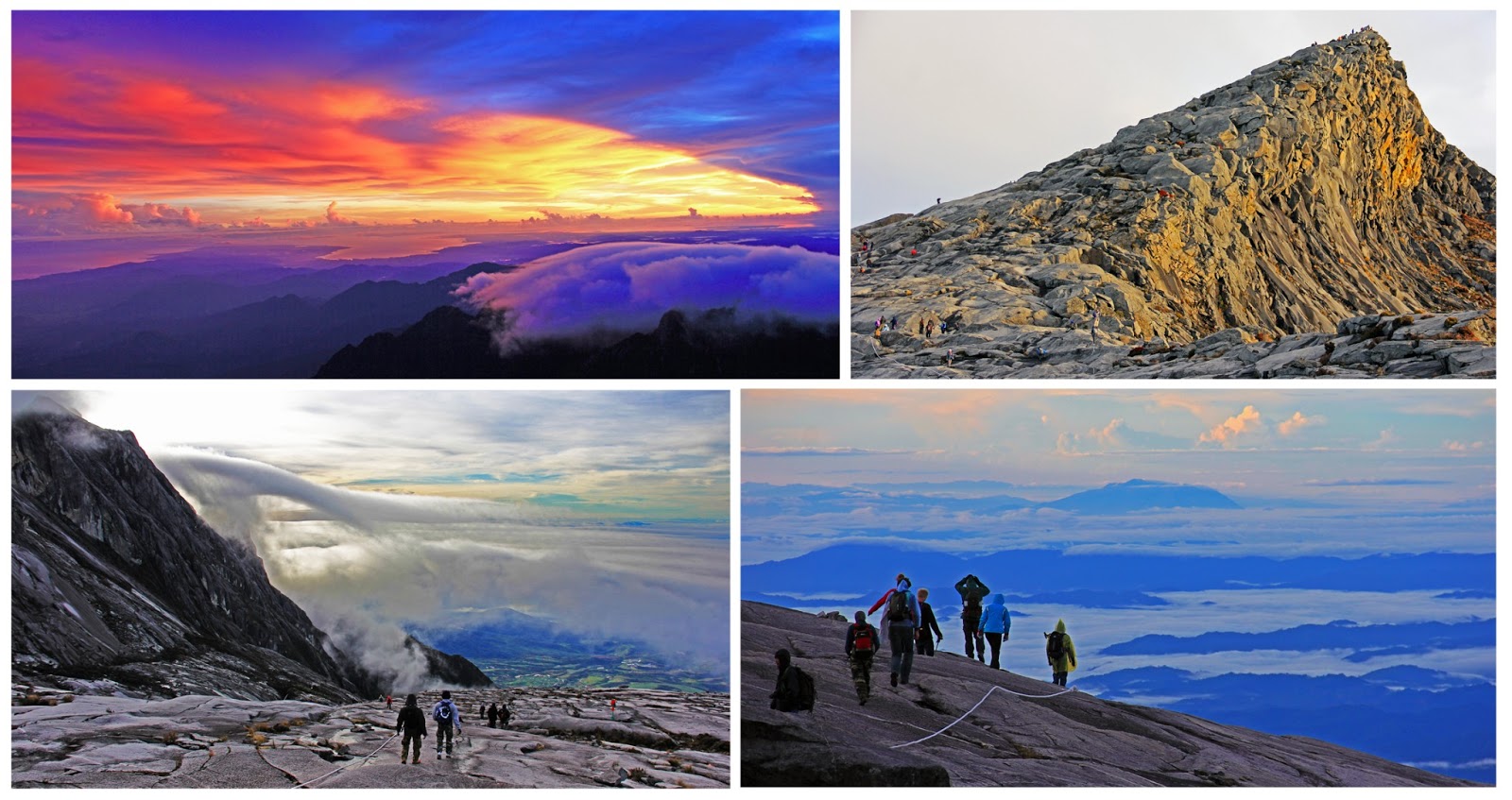
I’ve had my eye on Mount Kinabalu since I arrived in Borneo, literally. The entire northern tip of the island sits under his watch, with his colossal 13,435 foot peak dominating the vista for miles in every direction. Typically a morning person with a bold presence in the early hours, Mount Kinabalu tends to disappear under a blanket of clouds mid-morning and vanish into the horizon for the remainder of the day. He’s inconsistent and moody, and whether or not you’ll get to the top for a good view is a gamble considering his tumultuous relationship with Mother Nature. With only a couple of weeks left in Borneo, I had no choice but to try and conquer this almighty beast!

It was mid-week when I set out on the two-day trek, and since most of my friends had climbed the mountain already, I embarked on the journey alone. Well, Kinabalu National Park requires hiring a guide for the hike, so I had this little local man trailing me up the mountain the whole way. He didn’t speak much English, but was always there to provide an encouraging smile and a thumbs-up with every glance over my shoulder.

You can opt to hike the mountain in a day, but it’s best done broken up into two, since reaching the summit in the early morning will give you the best chances of having a view. And when I say ‘early morning’, I mean by sunrise. People start the second day of the hike around 2 o’clock in the morning and ascend the mountain with headlamps so they can be on the peak at daybreak. Laban Rata Guesthouse is perched on the mountainside just below 11,0000 feet, and provides meals and dorms for the mid-hike repose.

The trail was steep, and I realized quickly that there's no such thing as a switchback in Kinabalu National Park. The entire hike is a little over five miles in each direction, but the increase in elevation from the trailhead to the top is over 7,300 feet. As we started the hike my guide informed me that it would be a good five or six hours to Laban Rata, and I don’t know what got into me, but I was on a tear heading up the mountain! In just over two hours I was perched on the deck of the guesthouse drinking a beer and scarfing down a plate of mee goreng telur. Exhausted and full, I retired to my dorm for an afternoon doze and fell asleep to the sound of heavy rain on a tin roof.


The guesthouse was crowded when I awoke from my nap and the afternoon storm had come and gone. I spent the end of the day on an earthen terrace below the guesthouse and celebrated eventide by watching an endless parade of clouds march and morph through the sky. The residual vapor from the afternoon showers held a rainbow that seemed to bridge heaven and earth, and while the slope of the mountain obstructed the setting sun, the colors of dusk pushed through as the clouds below rolled over hilltops through a pink and orange light. I could see Kota Kinabalu and its outlying islands along the coast, and watched the twinkling city lights grow as daylight faded. With a long afternoon nap behind me and the growing anticipation of a summit sunrise, I was hardly ready for sleep, but with an alarm set for 2 a.m., I forced myself into an early bedtime.

It doesn’t matter if you’re close to the equator in the middle of summer, if you’re at 13,500 feet pre-dawn, it’s going to be pretty damn cold. After renting a jacket from the guesthouse, we set out in the middle of the night for the final leg of the ascent. The tree line broke soon after our departure, and our footsteps followed the wake of our headlamps as we scrambled up the rock face through the darkness. I was on par with my previous days pace, and made good time in reaching the summit a little before 5 a.m. The peak was small and awkward, and got progressively more crowded as dawn approached. Arriving early gave me the chance to stake out a good place for the sunrise, but trying to keep warm with over an hour until daybreak was challenging. By the time the sun started to peak over the horizon, I could barely feel my fingers enough to handle my camera.

We were blessed that morning with the perfect balance of clouds and clarity, and when the sun finally broke, the land was hit with an explosion of color. While the cloud cover above remained a static palette for the mutating shades of dawn, the opposing peak wore a tumbling billow that moved as though it were in a time-lapse. I could see for miles, all the way up to the tip of Borneo and out across the coastal islands. On so many mornings I’d gazed upon Mount Kinabalu from the shores of Mantanani, and now I was looking down on the island as a little speck in the South China Sea. It was an amazing sunrise. And I also gladly welcomed the warmth that it brought.


The hike back down to the guesthouse revealed over 2,000 vertical feet of beauty that had been covered in darkness just a few hours earlier. The collection of peaks that appeared saw-toothed from below were divided by sweeping moonscapes that rolled down towards a misty green earth. I took my time hiking down, and still reached the guesthouse before I usually get out of bed. After a quick rest and a small breakfast, I hit the trail again for the final leg of the descent, and reached the bottom mid-day on a wobbly pair of legs. I’d conquered Mount Kinabalu. Or maybe I’d become his friend. He did decide to give me a most excellent view, after all, and an experience that I’ll never forget.

Friday, July 13, 2012

MANTANANI MOONRISE


I was in Thailand a few years ago when I first realized that a full moon simultaneously rises with the setting sun. The astrological concurrence happened while I was on a rooftop in Bangkok with a great group of friends and a not-so-great bottle of tequila, and while I spun circles watching the two celestial bodies slowly trade places in the evening sky, I wondered why people don't consciously observe this stellar phenomenon more often. Ok, the world renowned Full Moon Party was about to pop off that night a few hundred miles south on Ko Pha Ngan, but that's more about drugs, neon paint, and fire dancing than actually enjoying the moon. Anyways, I'm talking about catching the two together, a sunset-moonrise.

I've seen quite a few moonrises in the past, but they were impromptu, and rarely in a place where I could also enjoy the sunset. So unexpected, in fact, that they would usually start with someone saying, "Whoa! Is that the moon?" One such occasion happened after work while I was living in San Francisco. My friend Davis and I were strolling through Chinatown on the way to North Beach, and as we crossed Broadway, we looked down past the neon lights and strip clubs to see a glowing moon rising up over the pavement. That's when we ditched the idea of going to a bar, grabbed a bottle of whiskey from a liquor store, and b-lined it to the top of Telegraph Hill, just in time to see the full moon crawl up into its cradle between the towers of the Bay Bridge and continue up into the stars. It was magnificent. But why wasn't the hilltop packed full of people?

The eastern tip of Mantanani Island is an ever-shifting thin strip of white sand that stretches out into a turquoise-blue sea. If you can get up early enough it's a great place to take in the sunrise, or in the evening, a moonrise. I was on the island in early June when I noticed a luminous luna in the night sky. I checked the internet to see if a full moon was approaching, and it was. So the next day I convinced a group of friends to head out to the eastern tip of the island for the moonrise-sunset. Damn weather! It was a cloud-covered bust. Don't get me wrong, it was an amazing place to experience the transition from day to night, but sans moon and sun, the fade into darkness was nothing but a gradual dimming of the heavens.


Luckily I was on Mantanani a month later for another full moon, and this time had the addition of an ideal forecast. That morning I hiked out to the tip of the island for the sunrise with my friends Yanti and Ramaesh. It was a tiresome daybreak trudge, but once we reached the eastern strand and saw the sun rising up over the sea, it was all worth it. I love kicking off the morning with a good sunrise! The weather was flawless that day, but in fear of a second botched attempt at a Mantanani sunset-moonrise, I hiked out to the tip of the island alone as evening approached. And, well, it would’ve been nice to share it with someone, but at the same time, it’s probably better that no one was around to hear me whoop and holler as the celestial show commenced. Mount Kinabalu, which is usually only visible in the early mornings, was popping off the horizon with acute detail. And as the sun disappeared over the island to west, the moon rose up in the east over the distant mainland, casting a pale reflection across the darkening turquoise.


My second sunset-moonrise was beautiful, and I will make an effort to see this monthly event more often. The next one happens in early August. I’ll be in Indonesia. And September, New York City...

Thursday, July 5, 2012

NAT NAT BEACH


The next day Natalie, Merissa, Ricky, and I rented some kayaks and paddled out to Cadlao Island in search of Nat Nat Beach. After an hour or so we floated up to an empty stretch of white sand along the west side of the island. The bay was lined with a craggy jungle that tumbled down off of a solitary mountain, and except for a couple of friendly dogs and a few fisherman that lived in a little shanty on the beach, we had the entire place to ourselves. Bearing a few cans of mango juice as gifts, we approached the fisherman to see if we were in fact on Nat Nat Beach. And we were! We’d found Nat’s geographic namesake! That’s when Nat carved her name in the sand and posed for pictures.

The day was ours to be lazy, sauntering around the beach, relaxing in the shade, sipping rum cocktails, and floating in the sea. We considered kayaking up the coast to another beach, but realized that we were perfectly content where we were. As the afternoon came to an end, we hopped in the kayaks and paddled back to El Nido. The next day we made our way back to Puerto Princesa where I caught a flight back to Kota Kinabalu, and Nat and Mo to Manila. Only a week in the Philippines, what a tease! Over 7,000 islands and I only saw a handful. There will be a next time. I will return...

ISLAND HOPPING


By the time the typhoon blew over and the paradisal weather arrived, Natalie, Merissa, and I were itching to get out and explore the Bacuit Archipelago. The elements had kept us stranded in El Nido since we’d arrived, and the islands had been taunting us from stormy seas, but with permission from a picture perfect forecast we were finally free to play! A charismatic young Lithuanian guy named Ricky entered the scene, and was more than happy to organize a day trip with us. There were plenty of outfits in El Nido offering package tours, but being the wheeler and dealer that he was, Ricky cut out the middleman and nabbed us a cut-rate local guide. Our group total was six with the addition of a friendly French couple, and after picking up some lunch supplies from the market, we set out to explore the islands.

Forty-five minutes after leaving El Nido, we floated into a tranquil cove off Matinloc Island. With the exception of a few small beaches, the tiny inlet sat wrapped in steep and jagged cliffs. After some excellent snorkeling and a splash in the crystalline water, we slipped through a fissure in the limestone and swam into the Small Lagoon. Even at low tide the passage was tight, and one-by-one we entered the enclosed reservoir. The water inside took on a flat emerald hue and as we swam across we sent out gentle ripples that lapped into towering karstic walls. On the far side of the lagoon a partially submerged hole in the rock opened up into a small swimmable cave. A few beams of light poured in through a fractured ceiling and illuminated the cavern walls with shimmering reflections. After some aquatic spelunking, we left the cave, made our way back across the lagoon, and swam out to our boat. Incredible.

Before stopping to eat we took a cruise through a big lagoon and skirted around a few more islands. The Bacuit Archipelago was captivating. For lunch we picnicked under some trees on a small beach surrounded by limestone cliffs. There was another boat anchored off the strand when we arrived, but after they left we had the whole place to ourselves. We nibbled on sweet pineapple and sipped on rum punch while our guide grilled up a delicious fish, and with the addition of rice, some good company, and an amazing beach, it turned out to be an ideal meal. 


With full tummies we pushed back out to sea. And not long after that the engine decided to retire for the day. Our guide gave it a tinker but it was no use, and soon we were in search of a tow, with our next destination being at the mercy of whatever help came our way. This unplanned turn of events didn’t really bother anyone, and in fact, we all seemed content just drifting around among the karstic giants. But soon enough another boat came floating by and roped us along for a tug back towards the Small Lagoon, and from there we hitched another tow to Seven Commandos Beach.

Seven Commandos Beach ended up being our last stop of the day. Only accessible by boat, but not too far from El Nido, the beach was manicured and lively, and even had a little snack and beverage bar. A picturesque palm tree grove provided plenty of shade and the view out to sea gave way to a horizon speckled with islands. We were still without a motor, so when our ride was ready to leave, we took off for El Nido. We returned a little before nightfall, and after jumping off the boat we strolled down the beach and watched the sun as it melted into the sea. It was a perfect way to end the day...